| This article is sponsored by Marlow Navigation, your premier global provider of full-scale crew and ship management services. |
(www.MaritimeCyprus.com) As a legal adage goes, you cannot have your cake and eat it, too. When a party, even a sovereign state, seeks to collect payouts from an insurance policy, it cannot cherry-pick the benefits while ignoring the rules attached to them. The UK Supreme Court recently reaffirmed this fundamental principle in a high-stakes ruling: if you rely on an insurance contract to claim financial compensation, you are bound to honour its arbitration clause and resolve disputes through the designated legal forum.
Introduction
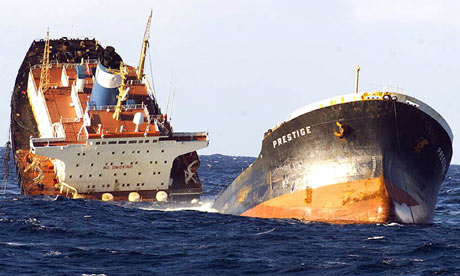
Decades after the catastrophic Prestige oil spill shook European waters in 2002, a major legal chapter has finally unfolded. The UK Supreme Court delivered a crucial ruling siding with marine insurers against the governments of Spain and France.
For non-lawyers, this dense legal battle carries massive implications for international contracts, arbitration agreements, and how cross-border legal disputes are handled worldwide.
Main Points of the Ruling
To make sense of this complex international dispute, here are the core takeaways broken down simply:
The Root of the Dispute: Back in 2002, the oil tanker Prestige sank off the coast of Spain, causing monumental environmental damage. While Spain and France sought massive financial compensation from the vessel's insurers, the insurance contracts strictly dictated that any disputes must be resolved through London-based arbitration under English law.
Ignoring the Rules: Rather than sticking to the agreed arbitration process, the states pursued legal judgments in local foreign courts. This triggered a major conflict over whether governments can claim the coverage benefits of an insurance agreement while sidestepping its dispute resolution rules.
Contract vs. Equity: The UK Supreme Court ruled that a state’s obligation to follow the contract's arbitration clause is contractual in nature rather than merely "equitable." Because of this, standard contractual principles apply, preventing claimants from enforcing the policy's benefits while walking away from its obligations.
A Win for Arbitration: Legal experts globally have welcomed the decision. It strongly reinforces the authority and enforceability of arbitral agreements, proving that English courts will protect contractual commitments and strictly limit when third parties or states can bypass agreed-upon arbitration.
What does the judgment mean for insurers and third parties?
The decision clarifies that third parties who rely on contractual rights cannot necessarily avoid the dispute-resolution provisions attached to those rights. Where the conditional benefit principle applies, an arbitration clause may bind the third party in relation to the claim it chooses to bring.
For insurers and parties drafting insurance policies, the judgment reinforces the importance of clear arbitration provisions and careful consideration of direct-action rights available to third-party claimants under foreign law. It also confirms that the legal characterisation of an obligation matters: a contractual obligation ordinarily attracts common-law damages, not equitable compensation.
The judgment also draws a practical boundary around compensation for future loss. A tribunal may compensate for future consequences of an established breach through an appropriately framed conditional award, but cannot simply award damages for a breach that has yet to occur.
The Last Word
While the environmental scars of the 2002 Prestige disaster still linger in the memories of affected coastal communities, this ruling shifts the spotlight firmly onto the binding power of international contracts.
By backing the insurers, the UK Supreme Court sent an unmistakable message: you cannot claim the benefits of a contract without honoring its terms. For international businesses, marine insurers, and policyholders alike, the decision provides vital legal certainty and reinforces respect for arbitration worldwide.
For more details on the Prestige Sinking and Oil Spill in 2002, Click HERE